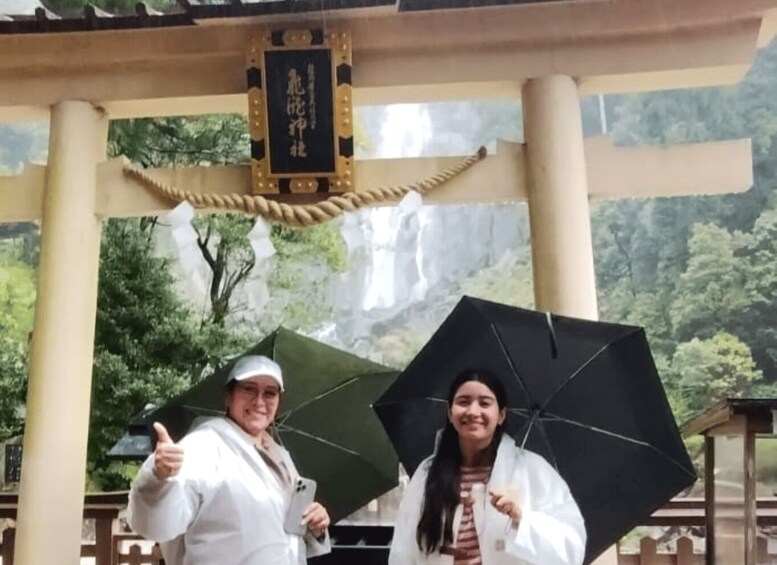
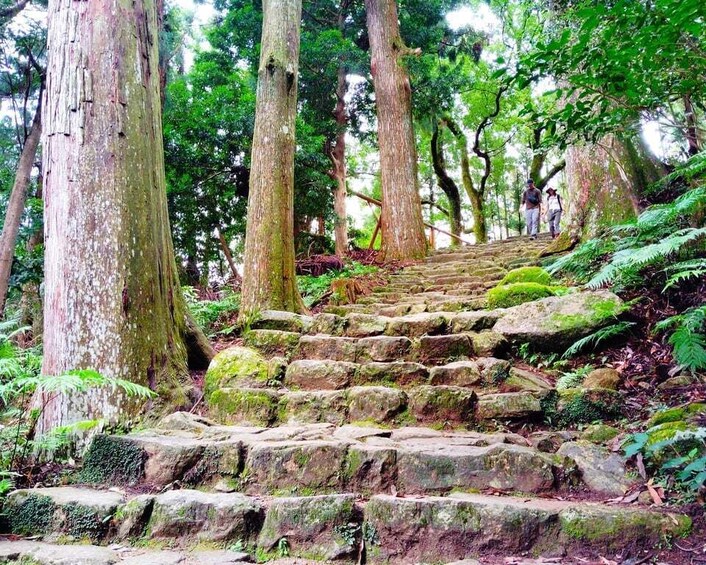
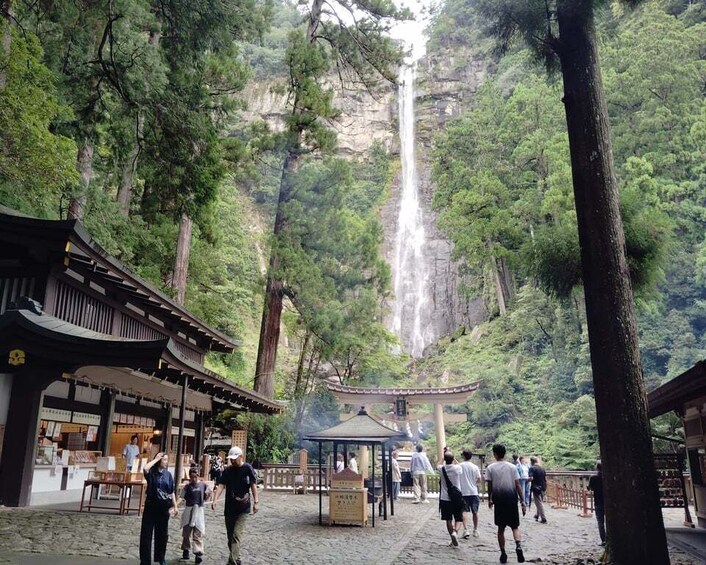
Begin your journey at the stone-paved approach to Kumano Nachi Taisha, one of the Three Grand Shrines of Kumano. As you ascend the gentle slope towards the large torii gate, your guide explains how Nachi became a focal point of the Kumano faith, a belief system rooted in nature worship and the concept that deities (kami) reside within mountains, forests, and waterfalls.
At the temizuya, experience the ritual of hand purification, learning how the idea of cleansing both body and spirit reflects Japan’s ancient sense of purity and reverence. Within the shrine grounds, your guide introduces Nachi Gongen, the deity that represents the syncretic union of Shintō and Buddhism — an embodiment of the coexistence that once defined Japanese spirituality.
Next, visit Seiganto-ji Temple, situated directly beside the shrine. The two sacred institutions have existed side by side for centuries, forming a rare and beautiful symbol of harmony between religions. Here, your guide explains how Buddhist monks, mountain ascetics (shugenja), and Shintō priests once shared rituals on this very mountain.
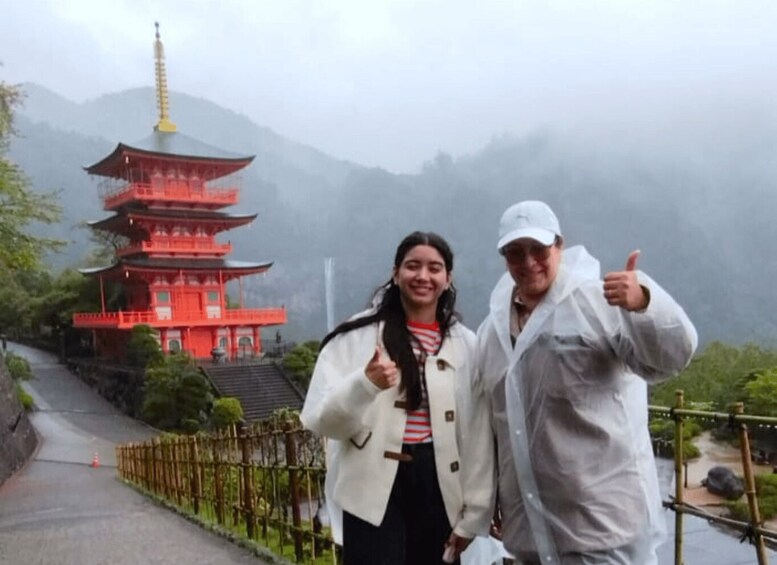
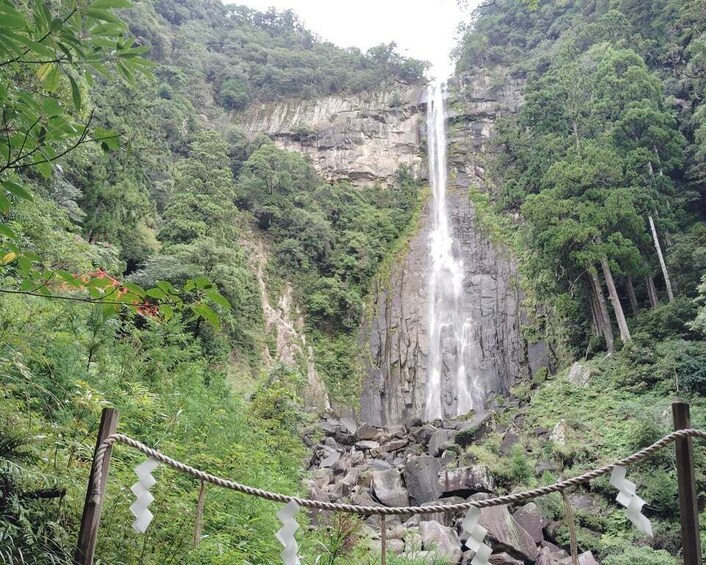
From the temple’s precinct, the view opens towards the three-storied pagoda and, beyond it, the breathtaking Nachi Waterfall — one of Japan’s most iconic sights. The 133-meter cascade has been worshiped as a deity since ancient times, known as the sacred body (shintai) of the god of Nachi. Your guide will describe how the waterfall’s constant flow symbolises purification, continuity, and rebirth, and how pilgrims from Kyoto and across Japan journeyed here for centuries to offer prayers for renewal.
The route continues towards Hirou Shrine (Nachi Waterfall precinct), the lower sanctuary of Nachi’s worship. Walking along the short approach that passes through the historic gate, you can sense traces of the old Kumano Kodo pilgrimage routes that once linked the sacred mountains of Wakayama. At Hirou Shrine, approach the base of Nachi Waterfall, where visitors have paid homage since prehistoric times.
Standing before the waterfall, feel the cool mist and the rhythmic sound of water that pilgrims have heard for a millennium. The experience is less about sightseeing and more about connection — understanding that faith in Japan has long been shaped not by temples or doctrines, but by encounters with the sacredness of the natural world.