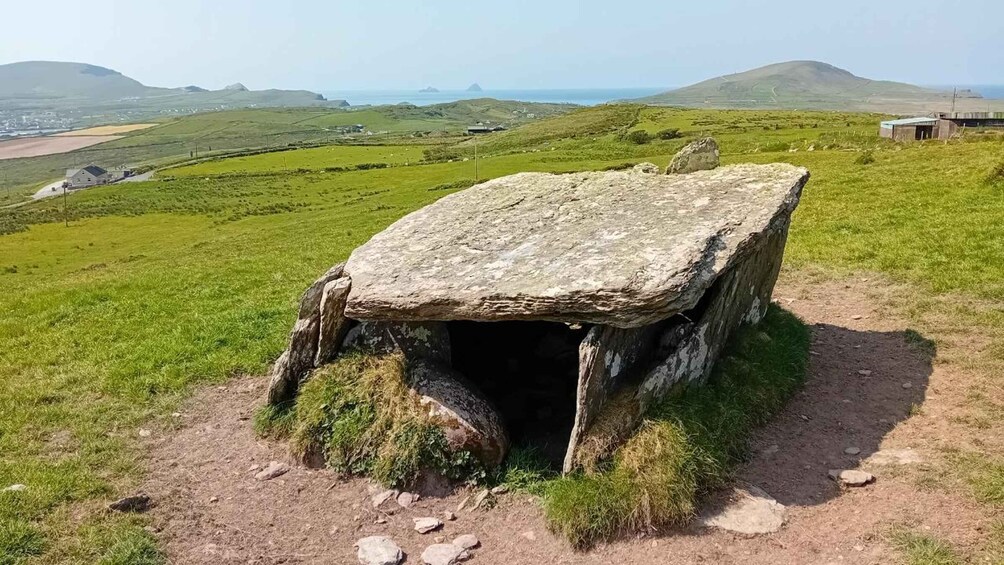
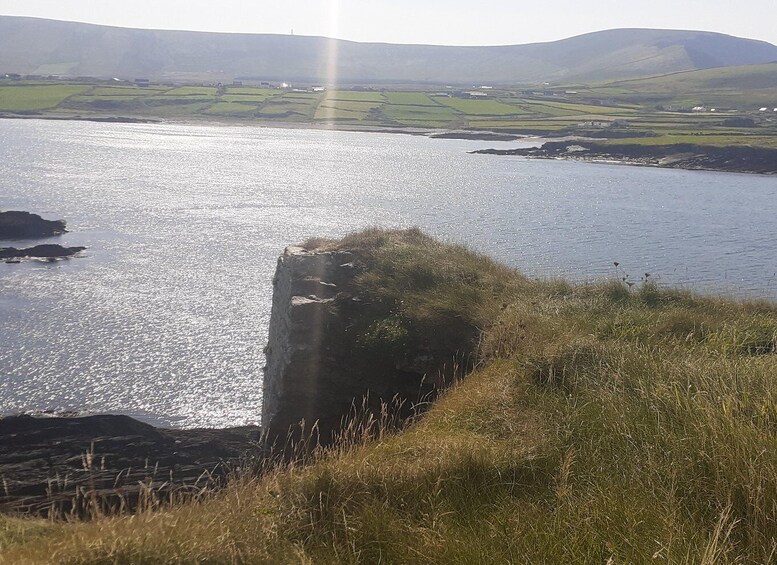
Discover the hidden heritage and real history of Valentia on a walking tour. Explore the megalithic tombs, iron age walls, ring forts, ogham stones, Early Christian sites, Norse and Gaelic settlements, castles, towers, abbeys, and Cromwellian forts.
Meet your guide, Eoin O’Neill, a native of Dublin, who spent many summers in Kerry. He has been living in Valentia for several years and is passionate about history. He did his doctorate on the Nine Years War and is currently writing a book on this.
Since moving to Valentia, he has set about exploring the area’s heritage and its history. He also runs the Foras Feasa: Exploring Irish History YouTube channel, a great way to get a sample of the history of South Kerry.
Start at the Clock Tower in Knightstown and explore the planned town of Knightstown. Pass the Lighthouse Keeper’s cottages, the Heritage Centre, and Kilmore Protestant Church (where Maud Delapp is buried).
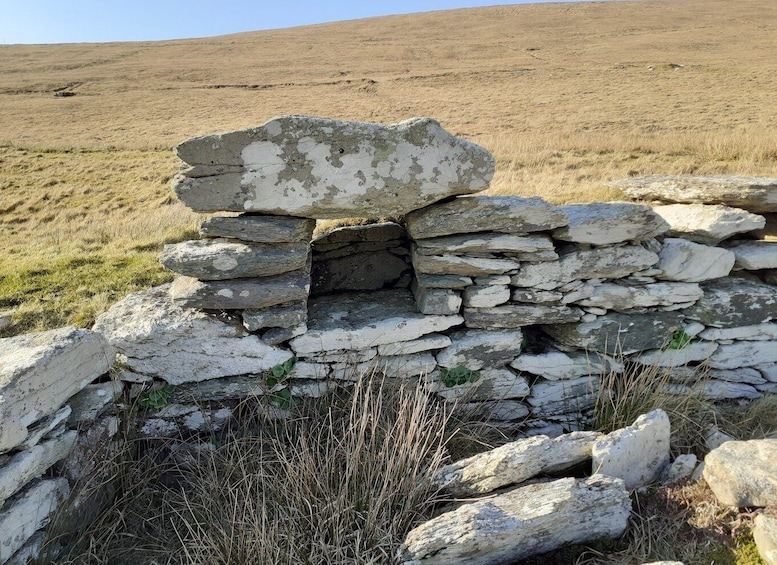
Alternatively, explore the wilder side of the island, by going to St Brendan’s Well, still in use today, and the ancient stone crosses nearby. Find out about Valentia in the Neolithic, Bronze, and Iron ages, such as a stone trackway found under the bog, a bronze age sword also found in the bog, fulacht fiadh, and enclosures.
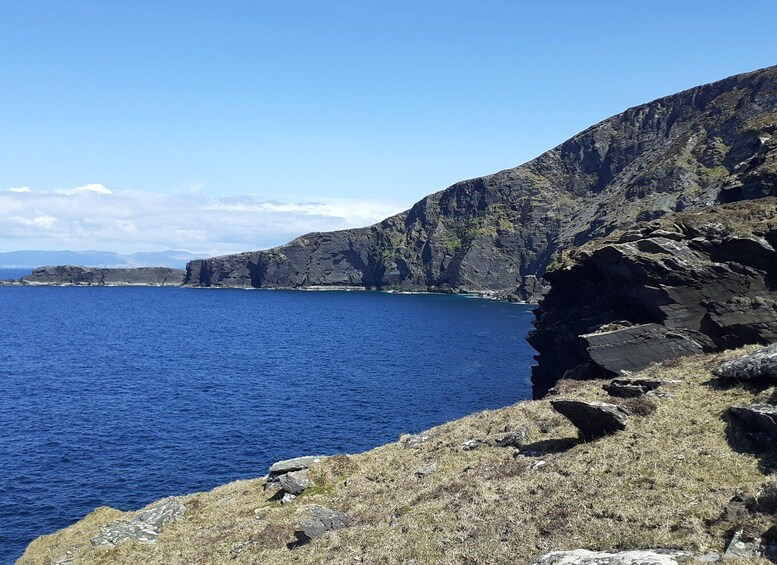
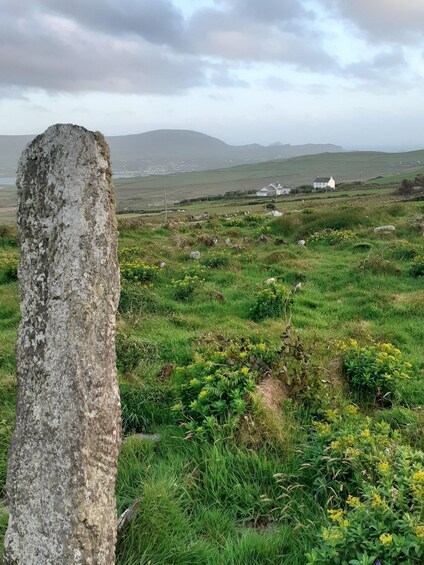
Or visit Bray Head. Starting in the car park, looking onto Foilhomurrun Bay, where the transatlantic cable first came ashore – and also the site of a Cromwellian fort. After this, follow the track up Bray head, making a few detours. Discover standing stones, the unique ruins of Crompeol Gaelic village, monastic huts with stone carvings, ancient field enclosures, and finally the signal tower.