Begin your journey at the legendary Bridge over the River Kwai. This historic iron bridge, famously immortalised in film and literature, was built by Allied Prisoners of War (POWs) under the direction of the Japanese army during World War II as part of the strategic Death Railway. Standing on this structure today offers a powerful connection to the resilience of those who labored here.
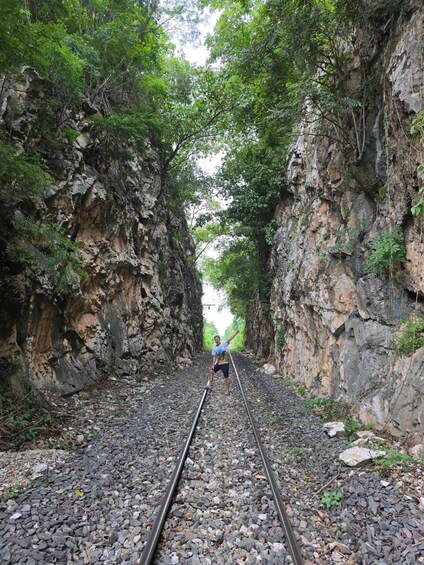
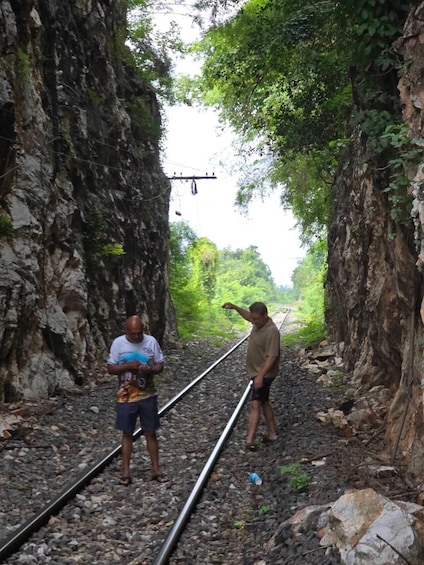
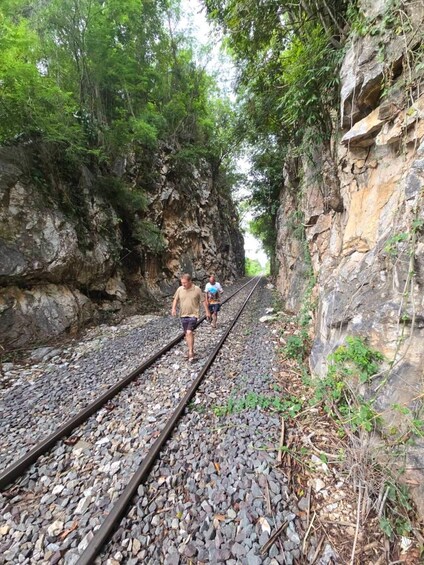
Next, take a traditional long-tail boat to reach Wat Tham Khao Pun. During WWII, the area around this temple served as a secret Japanese military hospital and a POW camp. Today, it is a serene temple housing stunning stalactite caves. Within these grounds lies the original “Hellfire Pass”—the very first of the infamous mountain cuttings where, under brutal conditions, prisoners were forced to carve through solid rock by hand, marking the beginning of the railway's most tragic chapter.
Gain deep insight into the harrowing realities of war at the JEATH War Museum. The name represents the nationalities of the prisoners involved—Japanese, English, Australian, American, Thai, and Hollander. The museum displays preserved bamboo huts and artefacts that vividly recreate the daily lives and sufferings of POWs during the railway's construction.
Pause for a relaxing, gourmet lunch in a serene, tree-filled oasis. Nestled in nature, this lush environment features a beautiful waterfall, offering a peaceful moment of reflection and rejuvenation away from the history-filled trail.
Deepen your understanding at the Death Railway Museum & Research Centre. This highly acclaimed interactive facility provides comprehensive historical context regarding the engineering feats and the human cost of the Death Railway, offering a factual and moving account of the forced labour and harsh conditions endured by thousands.
Conclude your tour with a solemn visit to the Kanchanaburi War Cemetery (Don Rak), the final resting place of nearly 7,000 Allied POWs who perished during the construction of the railway. This meticulously maintained memorial is a place of quiet reflection, honouring the lives and sacrifices of those who never returned home.