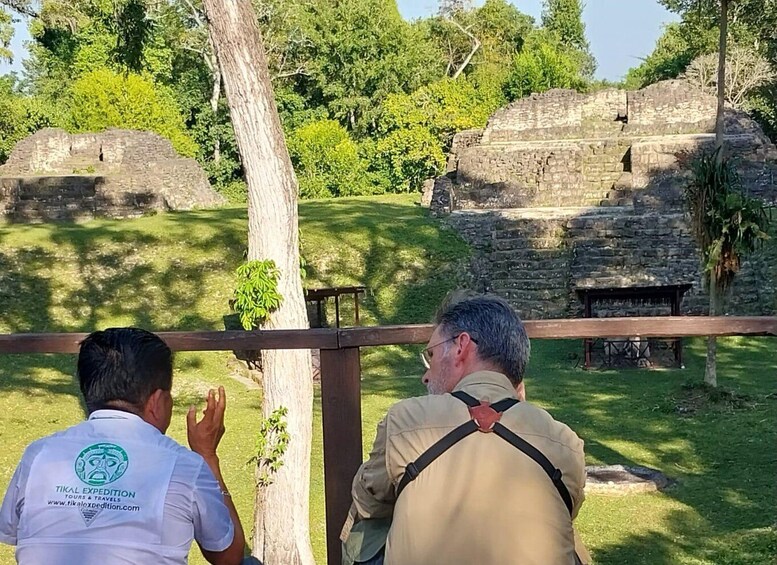
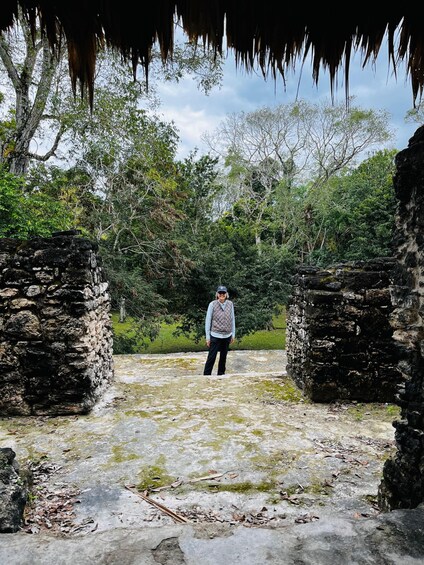
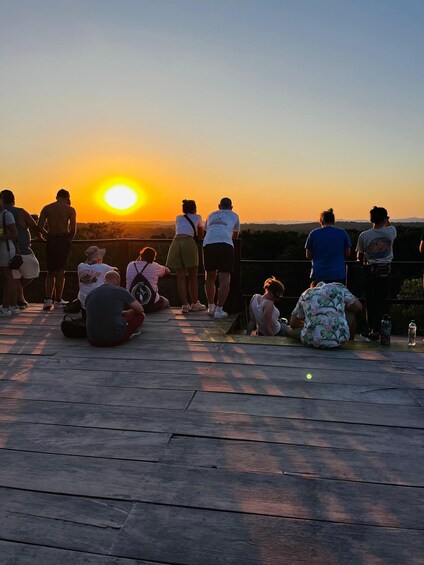
Uaxactún (meaning “eight stones”) is a pre-Columbian Mayan archaeological site located approximately 23 km north of Tikal, in the municipality of Flores, Department of Petén, Guatemala. In ancient times, its name was Siaan Ka'an (meaning “born of the sky”). The modern name Uaxactún was given to the site by archaeologist Sylvanus Morley in May 1916. This city was inhabited from the Preclassic period, around 900 B.C., throughout the Classic period, until it was abandoned during the Classic Maya Collapse around 900 A.D. Uaxactún is the first archaeological site where the existence of the Mayan false arch was observed, and it is also considered the first archaeological site where the Mayans observed the spring equinox, making it the oldest astronomical observatory in Mesoamerica. Today, a three-day festival is held at this site to observe the astronomical event.
Tikal was the capital of a belligerent state that became one of the most powerful kingdoms of the ancient Mayans. Although the site's monumental architecture dates back to the 4th century B.C., Tikal reached its peak during the Classic Period, between 200 and 900 A.D. During this period, the city dominated a large part of the Mayan region in political, economic, and military terms; it maintained ties with other regions throughout Mesoamerica, including Teotihuacán, in the distant Valley of Mexico.
The Tikal archaeological site contains around 5,000 pre-Hispanic buildings over an area of approximately 16 km² (6 square miles), of which only 5% have been restored and made accessible for exploration. Tikal's residential area covers approximately 60 km² (23 sq mi), much of which has not yet been cleared, mapped, or excavated. The city represents an ancient Mayan capital that ruled over a vast territory during the Classic period. The name Tikal means Place of Voices, but its original name may have been Yax Mutul or Mutual.