Best Seasons to Visit Detian Waterfall (June – November, Most Spectacular)
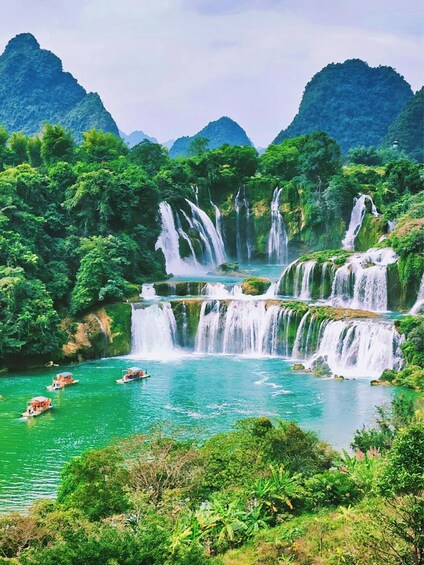
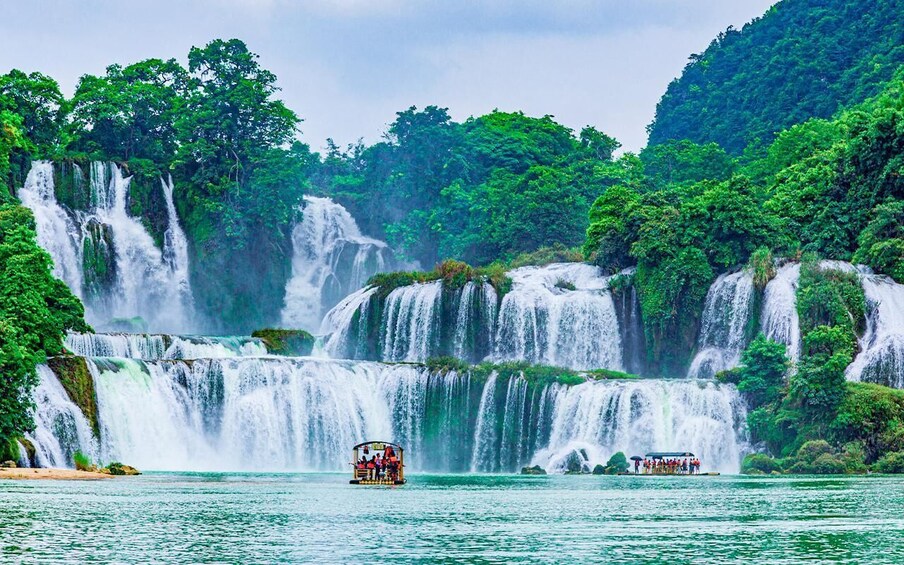
Full powerful cascades, Detian merges with Vietnam’s Ban Gioc Waterfall. Rainbows often appear in the afternoon. Golden waterfall view possible after heavy rains. Peak flow: June–September.
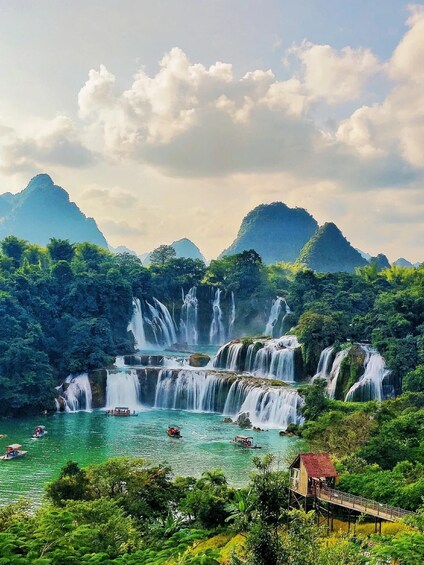
Depart by car from your hotel or designated meeting point, travelling along the China-Vietnam border highway to Detian Transnational Waterfall. Upon arrival at the scenic area, walk to the bamboo raft pier and board a bamboo raft to get up close to the waterfall. Experience the awe-inspiring sight of an 80-meter-high curtain of water cascading down, with mist spraying across your face. Along the way, capture the Vietnamese Ban Gioc Waterfall in the same frame and interact with Vietnamese bamboo rafts.
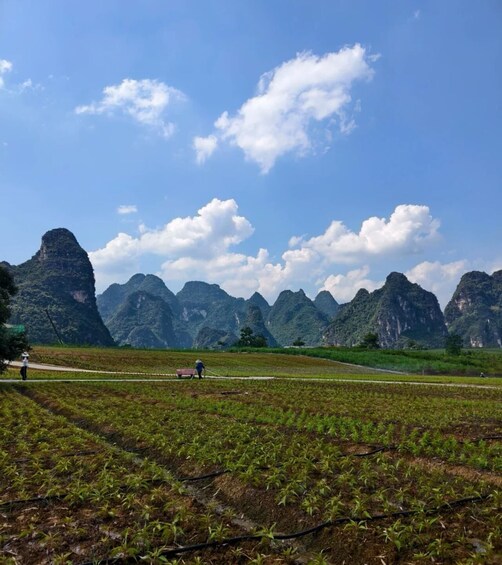
After the bamboo raft ride, walk along the wooden boardwalk to the Rice Field Coffee House. Take stunning photos capturing the “waterfall + rice fields + karst peaks” in a single frame from the glass observation deck and the bird’s nest swing, then order a cup of Vietnamese drip coffee to relax.
Walk to the exit at the China-Vietnam Cultural Street and enjoy a light border-style meal on your own, such as Vietnamese chicken noodle soup or baguettes, to rest for a while.
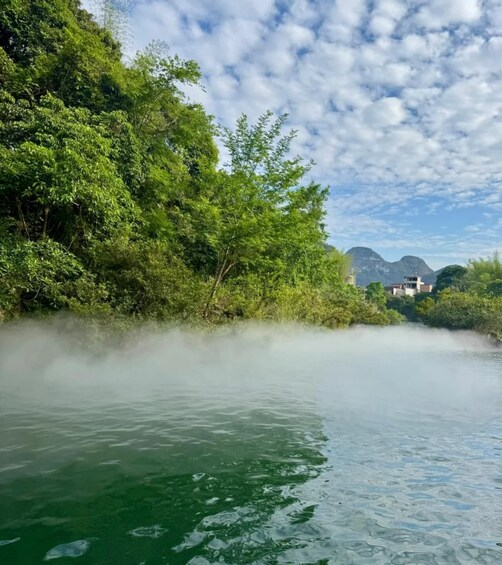
Drive for about 1 hour from the lower reaches of Detian Waterfall to Dongna Yu Bay Scenic Area (located along the Black Water River, a filming location for the TV series The Legend of Hua Qiangu). Board a boat at Tusi Pier to navigate through the “water karst forest” of the Heishui River, passing landmarks such as the Water Fortress Gate, Qixingyu Island, the Mist-Shrouded Secret Realm, the “Tongtian Bridge” from The Legend of Hua Qiangu, and Laughing Buddha Mountain. Listen to a Zhuang ethnic guide explain Tusi culture and local legends.
Return to Nanning by coach, reflecting on the day’s experiences of the border’s natural landscapes and culture along the way, bringing the itinerary to a successful conclusion.