Argolis is one of the most mythologically rich regions in Greece. In this tour we will explore sites related to goddess Hera and her detested demigod Hercules, son of her husband Zeus with a mortal woman. We will also visit more sightseeings of equal importance located at close proximity.
- The Mycenaean Dam of Tiryns
This massive Dam is a Bronze Age engineering marvel directly tied to Hercules's Labours and also the first hydraulic work in Europe. Before the 13th century BC, Tiryns suffered devastating floods so the myceneans built the dam and an artificial channel to divert the torrent into a safer riverbed.
The connection is obiously with the fifth labour: Hercules was ordered by King Eurystheus to clean the filthy stables of King Avgeias in a single day. Hercules used his strength to divert a river and flush the stables clean. The parallel between real-world mycenaean flood diversion and the myth is striking. We will walk also the ancient riverbed to trace its route towards Tiryns.
- The Acropolis of Tiryns
We then move to the majestic 13th century BC Acropolis of Tiryns. In myth this Acropolis was the palace of King Eurystheus, the very place where Hercules received the commands for the twelve grueling Labours. As we wander the ruins we will see the monumental “Cyclopean” stone walls, so large that ancients believed only giants could lift them. The site was excavated in the 19th century by Heinrich Schliemann, the archaeologist who discovered Troy too.
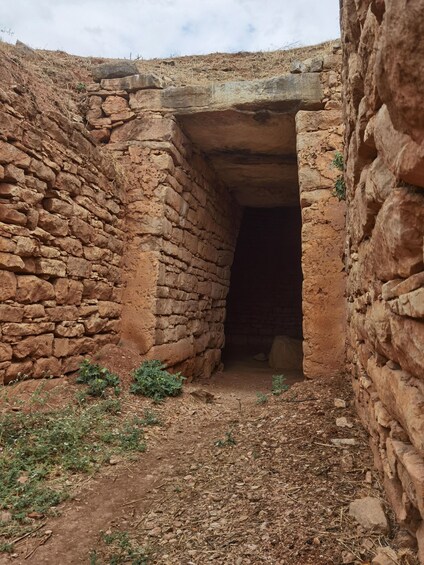
- The tholos tomb of Tiryns
Standing remarkably intact for 3.200 years this tomb is one of the few of its kind in Greece. It is believed that it belonged to the mythical king of Tiryns Proitos who is immortalised in Homer's Iliad.
- The Mycenean cemetery in Dendra
This is the cemetery of a minor kingdom of the mycenean civilisation named Midea. It features several chamber tombs as well as the royal tomb of this kingdom. It was used from the 15th century BC up to the 5th.
- The Heraion of Argos
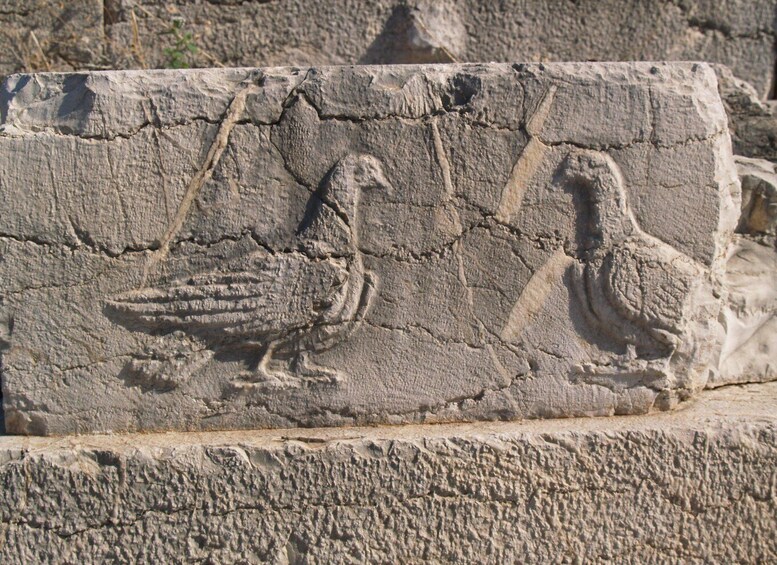
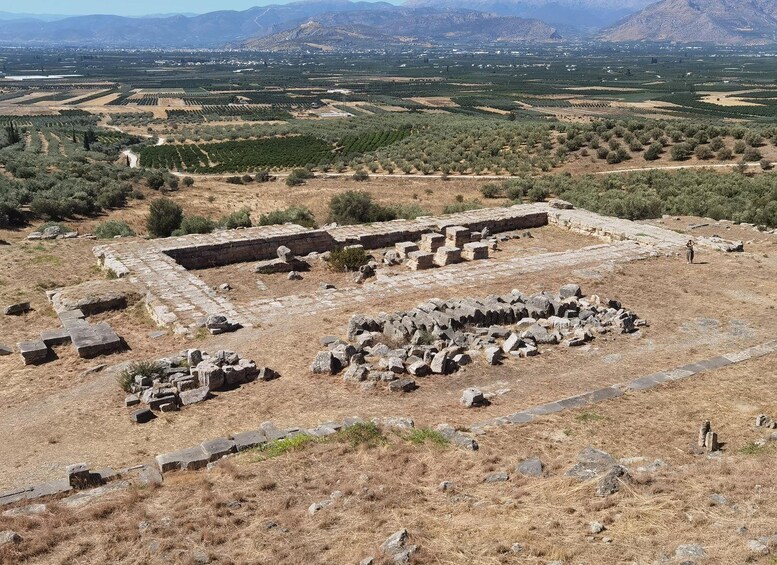
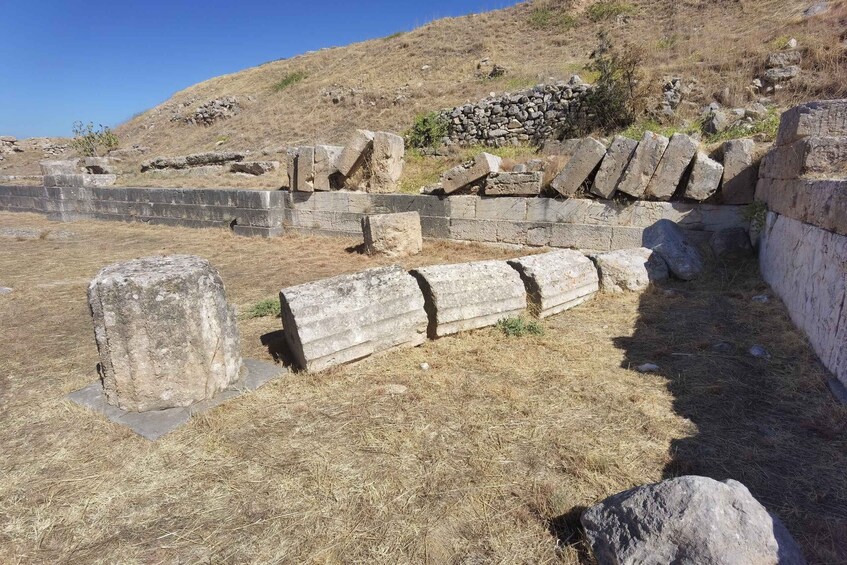
In the final site we will wander through three stone terraces built into the hillside to discover the centre of worship of Hera as the patron goddess of Argos. Here is the temple that once housed Polyclitus' famous gold-and-ivory statue of Hera. We will explore the remains of the ancient stoas, the ceremonial banquet hall (hestiatorion), and the Roman baths, while taking in sweeping, uninterrupted views of the Argolic Gulf and the surrounding olive groves.