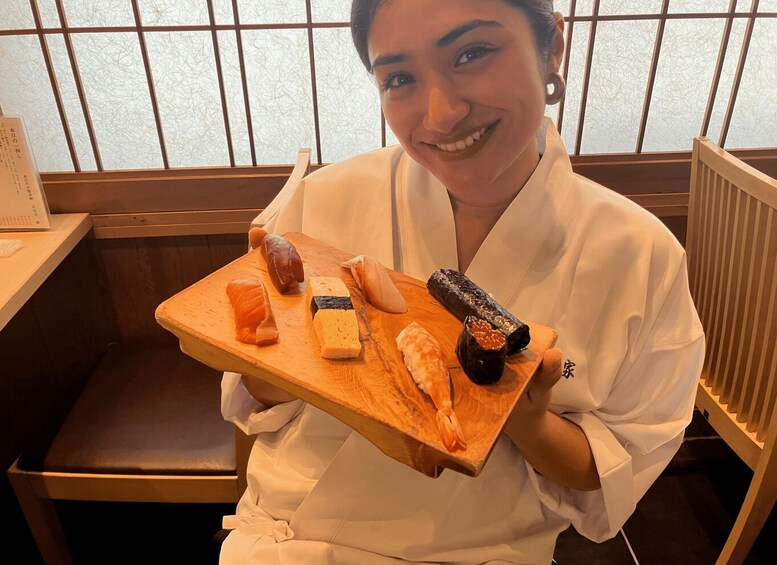

When you arrive in Wajima, you step into a town shaped by its position on the Noto Peninsula — a region long defined by its relationship with the Sea of Japan. The restaurant where your session takes place is a working, casual sushi venue, not a formal dining room, which means the atmosphere is approachable from the moment you walk in. A guide welcomes you and sets up the session, giving you a clear sense of what the next 90 minutes will involve.
The sushi chef demonstrates nigiri technique directly in front of you, showing how rice is formed and how fish is placed and pressed into shape. You then follow along, shaping your own pieces one by one. Your guide translates the chef’s instructions throughout, so nothing is lost between demonstration and practice. When questions come up — about technique, ingredients, or the chef’s own background — you ask them directly, and answers come back through the guide in real time.
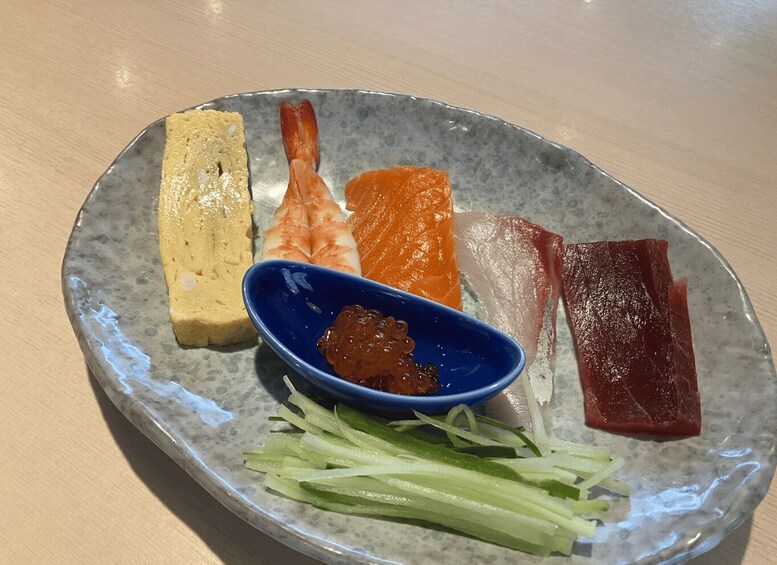
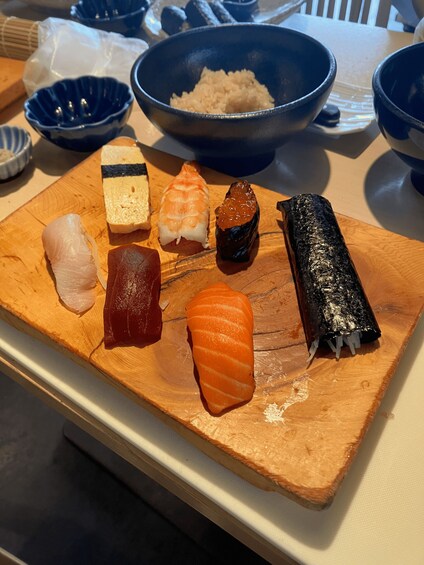
By the end of the session, you have shaped a set of nigiri pieces with your own hands, guided by someone who works with these ingredients daily. You sit down to eat what you made, with the chef’s finishing touches if needed. The result is a direct, edible record of what you practised — a set of sushi produced through your own effort, in a working kitchen in one of Japan’s most distinctive coastal regions.