Begin your walking tour at Nadir Divan-Begi Madrasah, an elegant landmark beside the historic Lyabi-Hauz complex. Take in the madrasah’s striking entrance and ornate details before stepping into the lively plaza, where a tranquil pool is shaded by ancient mulberry trees. For centuries, this square has been a gathering place at the heart of Bukhara’s old town. Today, it remains a welcoming spot to pause, watch local life unfold, and imagine the merchants and travellers who once passed through the city.
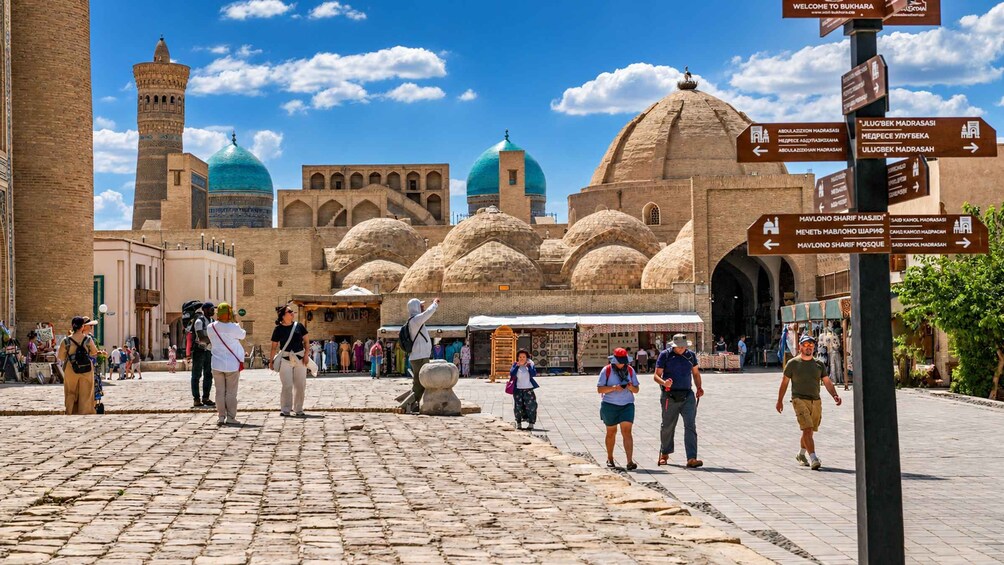
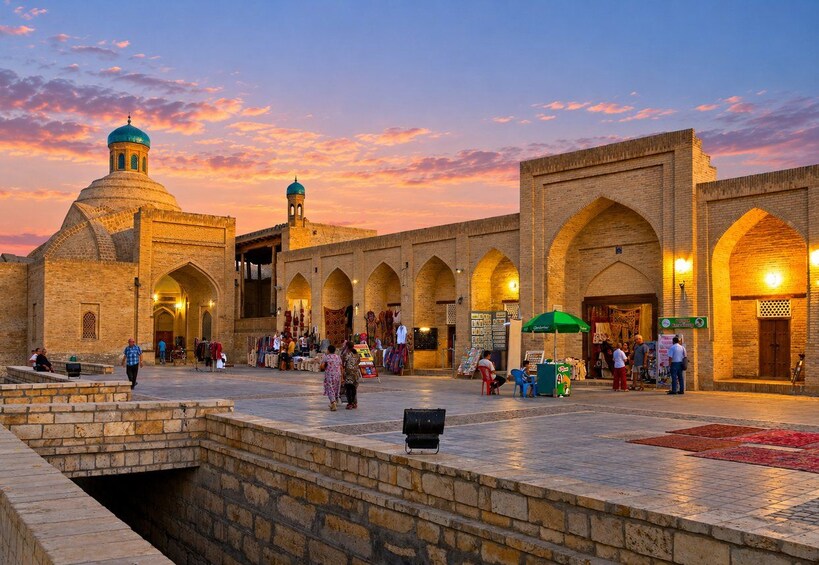
From Lyabi-Hauz, follow the narrow lanes towards Bukhara’s famous domed bazaars. Your first stop is Toqi Sarrafon, traditionally associated with money changers and the exchange of currencies along the Silk Road. Its vaulted roof and connected passageways offer a glimpse of how trade once shaped the city’s daily rhythm. Continue to Toqi Telpak Furushon, the bazaar known for its traditional headwear, then make your way to Toqi Zargaron, where jewellers once crafted and sold their work.
Next, visit Magok-i-Attari Mosque, a remarkable monument tucked below the level of the surrounding streets. Its layered history reflects the many eras that shaped Bukhara, with the mosque built on a site associated with earlier pre-Islamic places of worship.
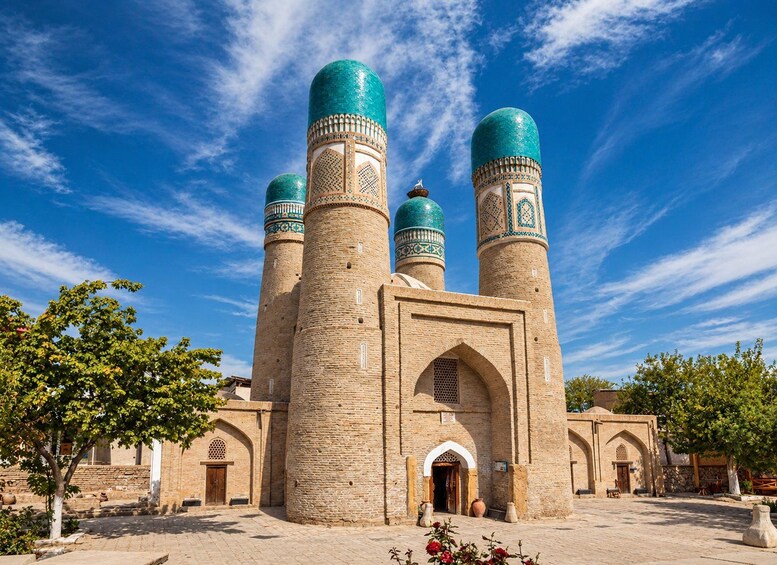
Continue to two madrasahs that offer a striking contrast. Ulughbek Madrasah, founded by the astronomer and ruler Ulughbek, is known for its measured design and place in Bukhara’s tradition of learning. Nearby, Abdulaziz Khan Madrasah makes a more lavish impression, with colourful tilework and elaborate ornamentation across its entrance and interior details.
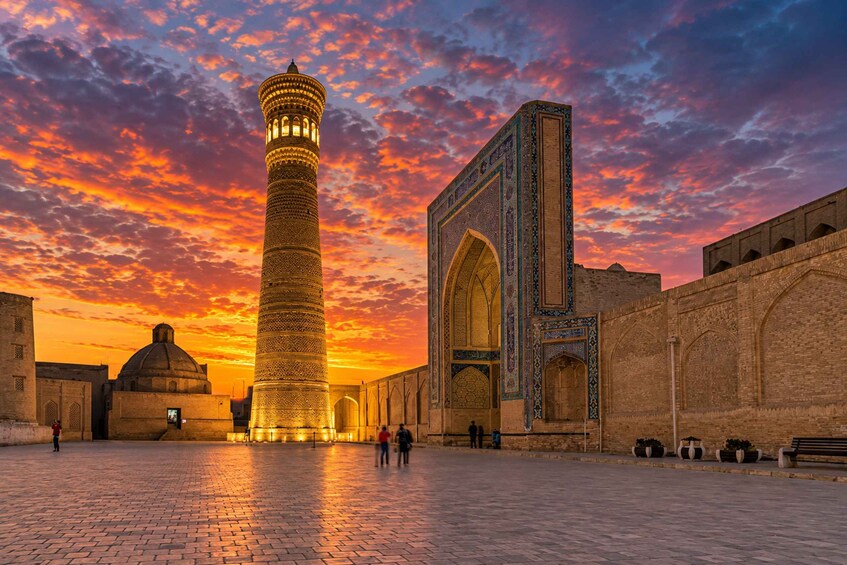
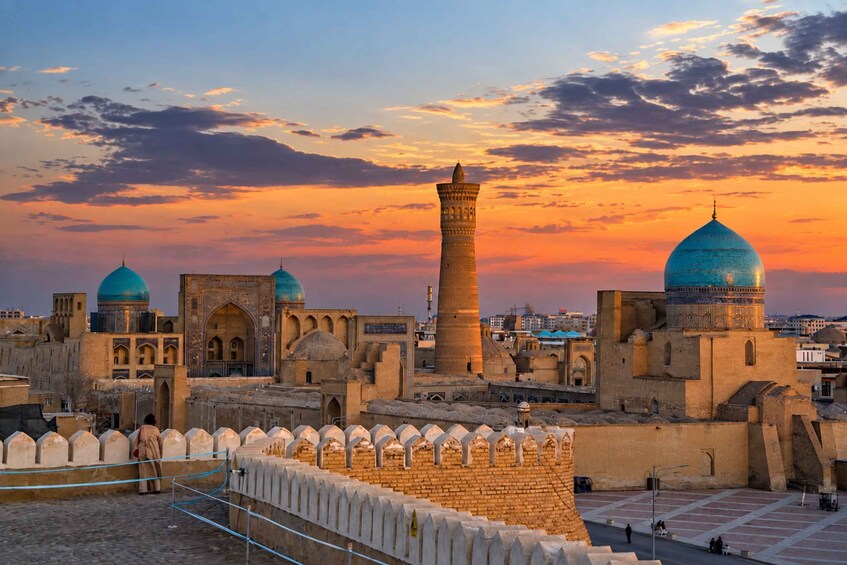
The route then leads to the monumental Poi-Kalyan Ensemble, one of Bukhara’s most celebrated landmarks. Explore the spacious courtyard of Kalyan Mosque, take in the impressive façade of Mir-i-Arab Madrasa, and look up at the Kalon Minaret, whose tall brick structure has defined the city’s skyline for centuries. The scale of the complex and the intricate patterns in its masonry make this a memorable place to pause and take in Bukhara’s architectural heritage.
From Poi-Kalyan, continue to the Ark Fortress, a vast citadel that served as the residence and seat of power for Bukhara’s emirs. Its high walls enclose courtyards, gateways, and museum spaces that help bring the city’s political and royal history to life. As you walk through the fortress, imagine the generations of rulers, officials, and visitors who entered through its gates.
The final part of the tour takes you to three distinctive monuments. Bolo Hauz Mosque, with its elegant wooden columns and beautifully decorated ceiling, stands beside a reflective pool and offers a quieter atmosphere after the bustle of the old town. At Chashma-Ayub Mausoleum, discover a site tied to local traditions and pilgrimage. End at the Samanid Mausoleum, a compact but extraordinary example of early Islamic architecture, celebrated for its intricate geometric brickwork and harmonious design.