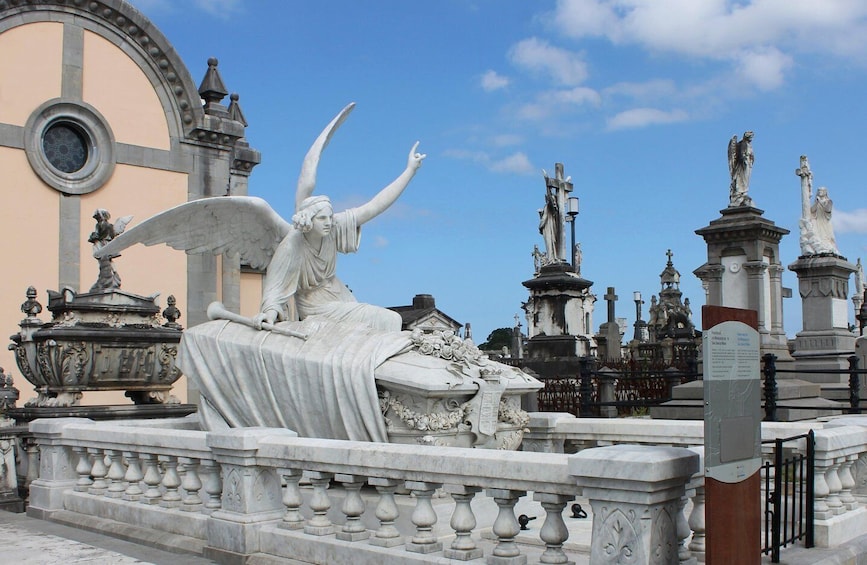
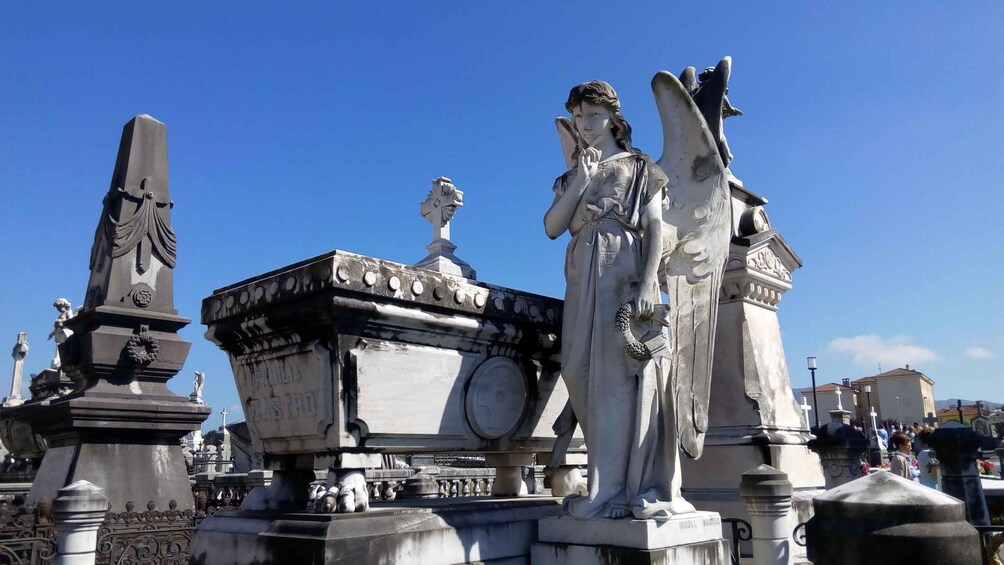
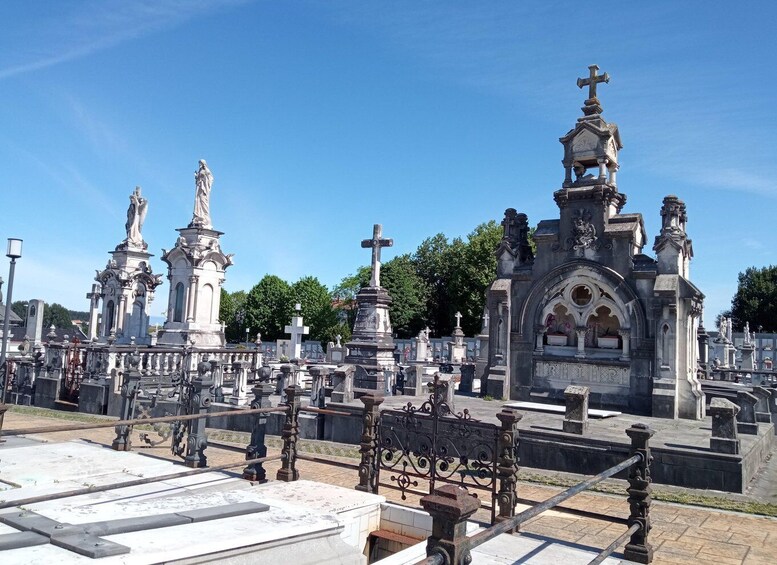
The Municipal Cemetery of La Carriona is one of the most unique in Spain. Built by the architect Ricardo Marcos Bausá at the end of the 19th century, thanks to the prosperity of the bourgeoisie and the “Indianos” who lived in the region, it is the largest open-air museum in Avilés and constitutes a very important part of the town's artistic and cultural heritage, not only because of its architectural and sculptural elements, but also because of its urban design: it is a whole city, the city of the dead.
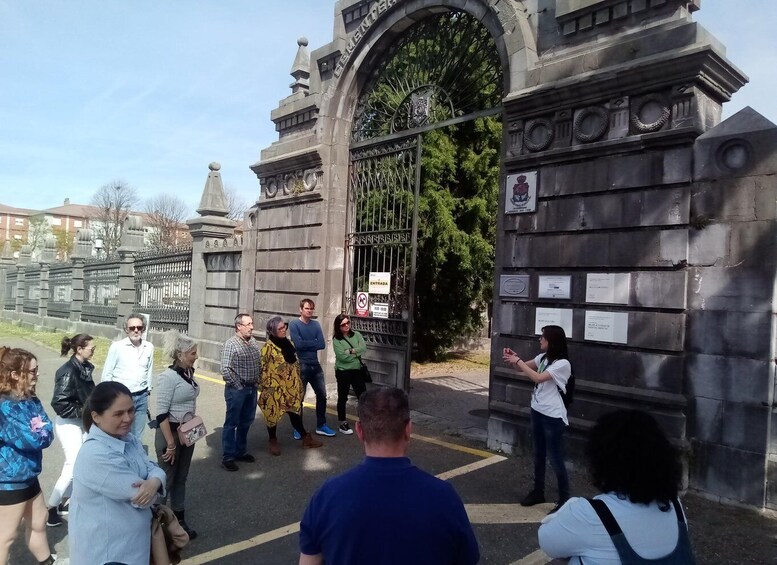
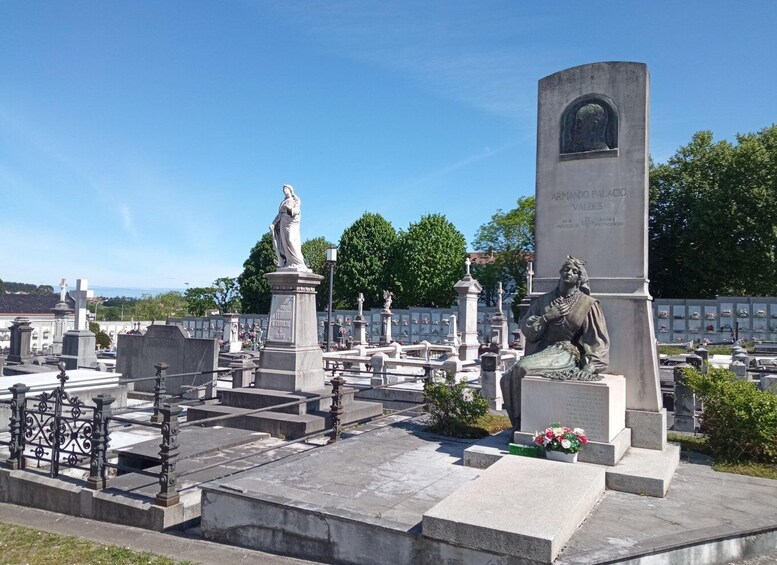
On our guided visit, we will walk through its main and secondary streets and talk about the city's art, history, and memory through its mausoleums and the historical figures who rest there, such as the writer Armando Palacio Valdés, the poets Marcos del Torniello and Ana de Valle, and the musician Julián Orbón. There are also sports figures from Avilés: the athlete Yago Lamela and the football players Jesús and Enrique “Quini” Castro.
It belongs to the European Cemetery Route, is part of the European Association of Significant Cemeteries, and in it we can find works of various styles (from eclecticism and historicism to rationalism, including modernism) made by very important artists of the time, such as Manuel del Busto, Tomás Acha Zulaica, Armando Fernández Cueto, Ángel Arias Falcón, and Cipriano Folgueras Doiztúa, whose sculpture for the pantheon of the Marquises of San Juan de Nieva, made in 1902, was awarded the Prize for the best Spanish funerary sculpture by the magazine Adiós Cultural in 2015.