Shop travel
Shop travel
Shop travel
Stays
Stays
Flights
Flights
Cars
Cars
Packages
Packages
Activities
Activities
Deals
Groups & meetings
Open app
AUD
List your property
Support
Trips
Communication Center icon
Sign in
Unlock instant savings with Member Prices
Sign in
Feedback
Middle East
Beirut Governorate
Lebanon
Middle East
Plan your trip
Beirut Governorate Hotels
Holiday Rentals in Beirut Governorate
Beirut Governorate Flights
Activities in Beirut Governorate
Beirut Governorate Car Hire
Beirut Governorate Holidays
Beirut Governorate Travel Guide
Tourist Guide
The Mohammad Al-Amin Mosque', or Blue Mosque, is a Sunni mosque located in downtown Beirut, Lebanon. Construction on the Mosque began in 2002 and was completed in 2008. The mosque is built on the site of a 19th century prayer corner. Previous mosques had been built on the site but had stopped operating after the outbreak of the Lebanese Civil War (1975-1990). The mosque is one of the dominant features of the Beirut skyline
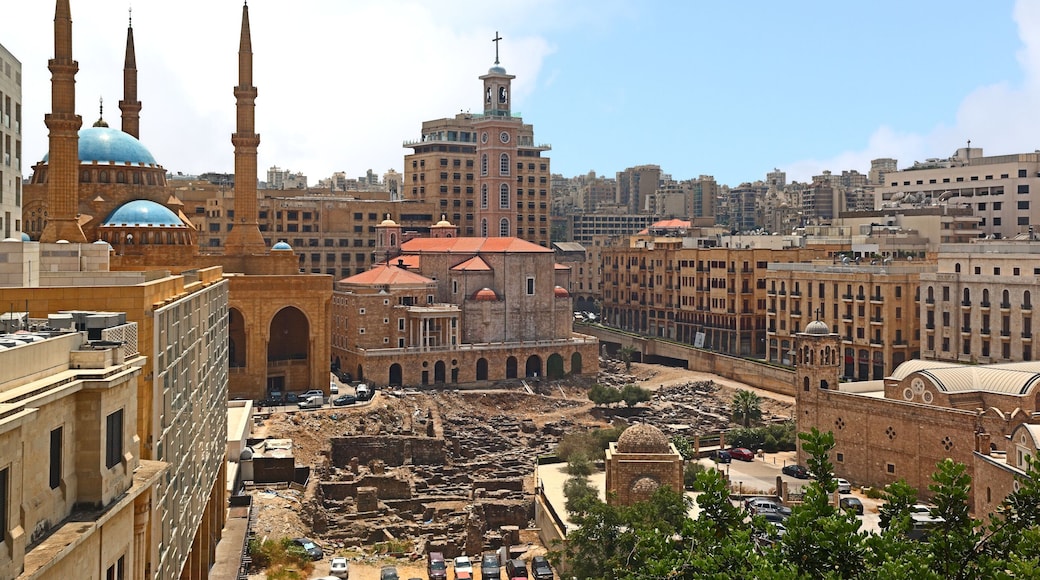
The Mohammad Al-Amin Mosque, or Blue Mosque, is a Sunni mosque located in downtown Beirut, Lebanon. Construction on the Mosque began in 2002 and was completed in 2008. The mosque is built on the site of a 19th century prayer corner. Previous mosques had been built on the site but had stopped operating after the outbreak of the Lebanese Civil War (1975-1990). The mosque is one of the dominant features of the Beirut skyline
Martyrs' Square is a central, and biggest, town square in Beirut and its central district. The square took its name in 1931 to commemorate the martyrs executed there under Ottoman rule. During the Lebanese Civil War, it formed the demarcation line that divided the city in half. During the reconstruction of the Square following the Civil Ware (1975-1990) archaeologists uncovered the ruins of a Roman city with a large section of a main Roman street, with paving and columns. The street also contained the remains of Roman baths. The site features the remains of the brick vaults and columns that supported the floor, surrounded by terraces with many benches.
Stunning Mosque in Beirut
25
See all 25 photos
Check-in
Check-out
Guests
Search
Go further with the Expedia app
Save on select hotels and earn double points when you book on the app. Our app deals help you to save on trips so you can travel more and manage it all on the go.
Scan the QR code with your device camera and download our app
c847270e-2801-40bb-b5fd-8f191730a898
bd1fe6c8-17cf-4b30-8b45-913bc9535922