The subway is cheap, easy to use – even for English speakers – and has excellent coverage. It stops at a large number of locations and stations are close to all the main tourist hotspots. While it's best avoided during rush hour, it makes for a safe, quick and reliable way to get around the heart of Beijing.
The upside of busing around Beijing is that buses are cheap and have a huge reach within the city. However, if you don't speak Mandarin they can be hard to navigate and can get awfully busy and uncomfortable. If you're the adventurous sort, get a public transportation card from a metro station, which can be used on bus routes as well.
There's something very satisfying about biking around Beijing, a city known for its cycling scene. The city is flat and full of bike lanes, so cycling is easy and can often be quicker than travelling by car, due to frequent traffic jams. Renting a bike can be a little expensive but will save you money on taxis in the long run.
Taxis are probably the easiest way to get around. Be aware that many drivers don't know the city too well and may just end up driving around aimlessly. Additionally, traffic jams can rack up the meter fare. It's worth taking a card for your hotel or having the address of your destination written down in Chinese characters, as most taxi drivers speak fairly poor English.
Beijing is prone to hot, humid summers punctuated by monsoonal rains and very cold, dry winters. Because of the summer rains the most popular times to visit are during the spring months, when it's generally warm but usually dry. If you do arrive in the summer be sure to dress appropriately as humidity can get the better of some visitors.
Crime is fairly low in China but the usual precautions should be taken. The biggest risks are traffic, which often entirely ignore the rights of pedestrians and other road users. Pollution and food and water safety are the main health risks, so asthmatics should carry an inhaler. Tap water and ice should be avoided and you should only eat at reputable restaurants.
Tipping is not essential in Beijing but the practice has become increasingly common, especially for higher-end and Westernised restaurants, tours and hotels. While you shouldn't feel the need to tip everyone you encounter, if you feel as though your service is exceptional, tipping 10 to 15 per cent or a few dollars is more than adequate.
Mandarin is the most widely spoken language in Beijing, and outside of touristy areas English isn't particularly widely spoken. However, it's a modern city and getting by without speaking Mandarin is relatively easy as a tourist. If you are just heading to the touristy spots around the city you won't have too much trouble.
Take one of five flights every week from Sydney to Beijing and you can get there in 12 hours with Air China.
Take a swift flight to Beijing from Perth direct. Get there in 13 hours with China Southern Airlines.
Depending on who you fly with you can take one of several weekly flights to Beijing. Get there in 20 hours via Baiyun with China Southern Airlines.
You can take advantage of the exciting Airport Express subway when you arrive in Beijing. It will drop you off at a few different places around Beijing depending on the line. Starting at 6am and running through until just after 11pm, you can expect to pay more than a standard subway fare – but it's still relatively inexpensive.
Airport buses run from each of the terminals and are the cheapest way of getting from the airport to Beijing city. However, it can be a little stressful if you have a lot of luggage or aren't sure where to get off. Buses don't have a set schedule and instead leave when full. A very cheap way to transfer but make sure you're prepared.
Private cars are offered by numerous companies to pick you up from the airport and deliver you in comfort to your hotel. Prices start from around AUD$30 but shared shuttle cars are a cheaper alternative. Take advantage of private cars for a quick and easy way to whisk you from the airport to your hotel.
Avoid taxi touts at the airport and instead head for the official taxi queue – there is one outside of each terminal. Official taxis will always be a cheaper, safer option. Drivers must use their meter, so if they refuse don't bother getting into the cab. Expect to pay a small toll fare on top of the meter price.
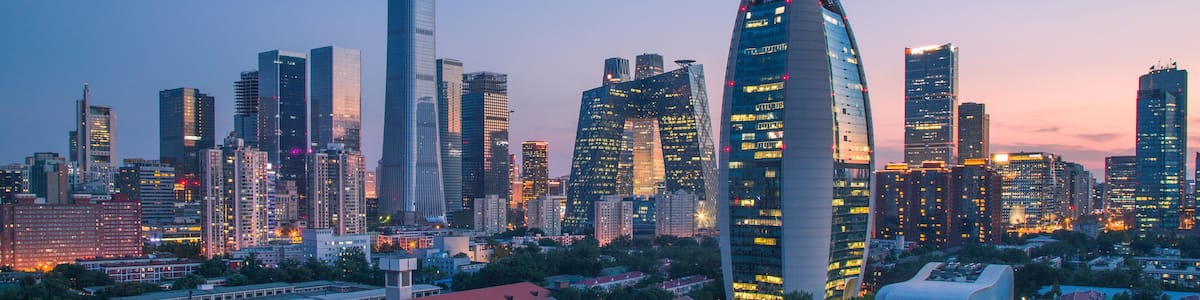
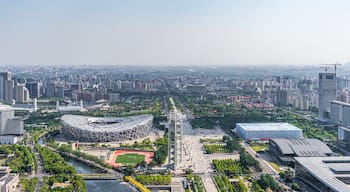
Beijing's latest landmark is the site of the spectacular 2008 Beijing Olympic Games. Thought to have held the most exciting opening ceremony in the Games' history, Beijing is very proud of its ultra-modern Olympic Park. Check it out for yourself on one of many guided tours of the main stadium and surrounding buildings. Shop around for the most convenient price and time.
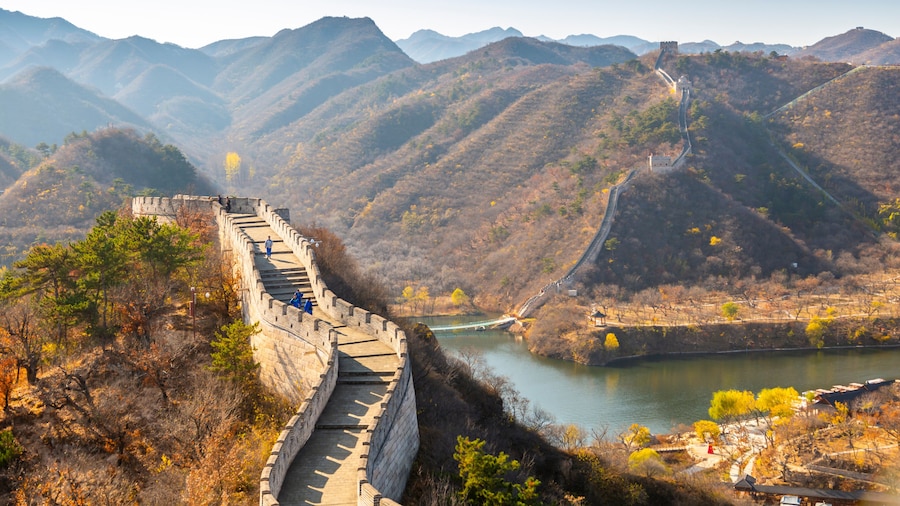
Not far from Beijing lies the Great Wall of China. As one of the world's most iconic landmarks and one of the seven wonders of the world, it's worth devoting an entire day to exploring it. Tours can also incorporate everything from general sightseeing to a tour of the Ming tombs, where the Ming Dynasty emperors were buried.
Beijing is too vast to be seen on foot, but bicycling makes sightseeing fun and manageable. If the idea sounds too overwhelming, opt for a bike tour, during which you'll be guided around Beijing's best known landmarks, temples and winding alleys while learning how to weave through its hectic traffic with the ease of a local.
China is internationally renowned for its talented acrobatic performers. While you're in Beijing make sure you catch one of these phenomenal shows that perform throughout the city. As well as world class acrobatics, the show is worth seeing for the colours, outfits and visual effects as well. A must-see experience for your trip.
No trip to Beijing would be complete without sampling some authentic Peking duck. QuanJuDe is one of the city's most famous spots to indulge. Close to some of the city's major landmarks, it makes a great dinner venue after a hard day's sightseeing. Still looking for more? Head to Sanlitun and Houhai for night of partying Beijing-style!
If you've got a budget to blow and a belly that's demanding something spicy, Three Guizhou Men is your best bet for ticking all the boxes. This trendy restaurant is a little expensive by Beijing standards but still affordable if you're looking for something a little bit more upmarket. Opt for the spicy lamb rack if you want to pull out all the stops.
When in China, it seems appropriate to get a little experimental with your cuisine. This restaurant has a long history – dating back to pre-communist times – of serving up traditional dishes that aren't for the faint-hearted. If you fancy sampling some more adventurous fare than sweet and sour pork, why not opt for flash fried tripe or sheep entrails?
This Taiwanese restaurant is best known for its to-die-for dim sum and soup dumplings. Choose from a range including crab meat, pork and pak choi. Prices are cheap and the service is great, which keeps Dintaifung as one of Beijing's most popular restaurants. Get in early because this place fills up fast – especially in the evenings!
Drum and bass lovers flock to White Rabbit Club for late nights and often some early morning partying after the sun has risen as well. The club draws in reputable DJs from around the world, including the odd big name, and is a consistent favourite with hardcore clubbers in Beijing.
It might be one of the worst-kept secrets in Beijing, but it's still one of the top bars. Fubar is tucked away in the Worker's Stadium. Yes, it feels naughty. But Fubar is one of the most enjoyable bars in the city – and serves up some of the most delicious cocktails too.
Serving up cocktails made from their own infusions, it's no wonder Apothecary gets named as one of Beijing's best bars over and over again. Despite being one of Beijing's more upmarket venues, it's very relaxed and friendly. Perhaps that's the secret behind why it's packed out every night.
This converted Chinese courtyard is now one of Beijing's most beloved clubs. As the name suggests, there are beds to recline on should you get a little tired and emotional during the night. High-end equals high prices, but it also means high quality in this chilled out joint.
Start your Beijing familiarisation tour by exploring Tiananmen Square in the centre of the city. It's the site of both Chairman Mao's declaration of the People's Republic in 1949 and where the massacre of 1989 took place. Next, head to the Forbidden City and take plenty of snaps of the luxurious palaces that both Ming and Qing Dynasty rulers once lived in.
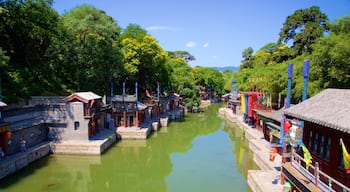
Get an early start and head to the Temple of Heaven at around 8am to people watch. The Ming Dynasty temple is now a park where locals come to practice Tai Chi, relax, play music or play a game of chess. Next, head to the Summer Palace, where three hours gives you time to look around the palace complex and relax near the lake, which offers ice skating in winter and boat hire in summer.
Seeing the Great Wall of China is an absolute must. It's easy to organise tours to take you to the site of this breathtakingly huge construction. One day is a bare minimum to get a feel for just how impressive this structure is. If possible go early and book accommodation nearby so you can witness the sun rising over the Wall.
Ghoulish but essential, Chairman Mao's Mausoleum is a fascinating way to spend an hour or so. This revered father of communism is still very highly thought of by locals, who flock to see him at the Mausoleum building. Finish your Beijing experience with a visit to a local Peking duck restaurant. The streets are packed full of them and a good way to find a decent one is to see where the locals flock. The busier the better!
MONTHS
MONTHS
Expedia Holidays > Beijing Holidays